
SAP Migration to the Cloud
Although many businesses are rapidly building a competitive advantage by running SAP in the cloud, others still have doubts. Often, these organizations migrate selected workloads that they consider less essential, such as development/test environments or disaster recovery sites. This decision is typically based on several misconceptions about the cloud and its suitability for mission-critical, resource-intensive workloads such as SAP applications. Below, we will discuss some of the most common misconceptions about the cloud and explain why they are unfounded.
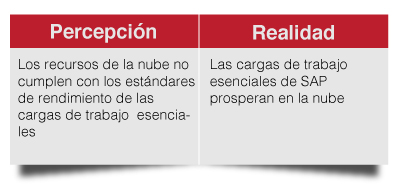
Cloud resources are not a one-size-fits-all solution. In fact, providers have designed virtual machines with varying specifications to meet the unique needs of your mission-critical workloads. For SAP in particular, there are optimized instances available for processing, storage, or memory, and SAP has certified those that meet performance requirements. Companies such as BP and Bristol-Myers Squibb rely on the cloud to run critical SAP workloads, and since 2008, even SAP has been running some of its own workloads in the cloud.

Native migration tools can help you move data and applications to the cloud quickly and securely. For example, using native tools, Zappos upgraded its entire SAP environment to SAP HANA and moved it to the cloud, all within 48 hours⁵. In addition, by working with consulting partners who have proven expertise in both SAP and cloud migration, you can migrate mission-critical SAP workloads more efficiently, build cloud architectures based on best practices, and get the training and support you need to manage your SAP environment in the cloud.

Cloud providers offer you granular control over the location of data and applications across your global footprint, enabling you to meet compliance and data residency requirements more easily. In addition, there are assurance programs that are native and designed to help you meet regulatory requirements, assess whether you are continuously compliant, and keep you audit-ready. Moderna Therapeutics achieved these benefits by leveraging the expertise of partners to ensure compliance with the necessary regulations in the biopharmaceutical industry.

Cloud providers use redundant and layered controls, continuous validation and testing, and a significant amount of automation to enable the underlying infrastructure to be monitored and protected 24/7. To further strengthen your security posture, you can leverage a wide variety of native and third-party tools and features. One company that is strengthening its security posture for its SAP applications in the cloud is Seaco, the world’s largest marine container rental company. The company used native cloud services to virtually isolate and control access to resources in detail, closely monitor its network, and securely deliver virtual desktops.
Why choose Pyramid Consulting and AWS for your SAP workloads?
From lift-and-shift migrations to broader SAP modernization, AWS is the most proven cloud for running your SAP applications. By trusting Pyramid Consulting to migrate your SAP workloads to AWS, you are leveraging an infrastructure specifically designed for SAP workloads, ensuring you get the performance your end users expect, with the security your critical SAP data requires. After migration, Pyramid Consulting and AWS offer a wide variety of services to help you modernize your SAP applications and leverage new technologies to maintain a competitive advantage.
Let us show you how to develop a competitive advantage.
Let’s schedule a coffee meeting!